YH: What techniques might be used in an opening sequence?

The use of sound in the sequence also plays a key role in establishing
enigma among audiences. The music used in the beginning gives
connotations of a wild west theme however, the use of the high pitched
bell like instrument leads audiences to think that it has an emotional
feel to it. The dialogues used in this sequence are also ones which help
in establishing the characters. The protagonist is shown to talk in an
unusual way which adds to the suspense for audiences, and the dialogues
of the female character connote that she is distressed and worried about
something. The drowning, of the female characters', dialogue by the
cars' engine leads to create further enigma for the audiences. Mise en
scene has also done a great deal of work to represent multiple aspects
in the sequence. The costumes of the characters such as the leather
shoes being worn by the male protagonist connote a sense of class or the
fact that he is someone who is not in line with latest trends. Thus,
further establishing the character for the audiences. The set design
also helps in creating enigma as shown in the establishing shot are two
separate environments the first one being the dark storm drain where the
protagonist is shown sitting opposite to a girl's body and one which
shows the greenery and beauty of a lush garden which connotes happiness
and comfort whereas the storm drain environment connotes sadness and
distress. These are a few of the techniques used in the opening sequence
of the film Brick.
EW: What generic conventions are there in this clip?
 The opening sequence of Brick (2005, Johnson) has a very strong film noir 'feel' to it. Film noir is a Hollywood style used primarily in crime dramas, the noir period was for the early 1940's to the late 1950's. Film noir, black film, translated from French, was originally applied to film by Nino Frank in 1946. Film noir is normally used to emphasize cynical attitudes and sexual motivations and does this through effects like low-key and black and white. Modern film produced in this way are not called noir films, rather neo-noirs.
Brick (2005, Johnson) used these noir effects in the opening sequence to connote that the genre of the film would be Mystery/horror/thriller/neo-noir, examples of this used in Brick (2005, Johnson) are the lighting effects used when the main character is crouching next to the tunnel, the lighting used is low key when the camera is used as a close up of his face, reinforcing the film noir effect and creating enigma in the audience. Another effect that increases the tension of the opening sequence is the shot of the females hair and hand when she is next to the flowing water this also create enigma as the hair is in front of the females face so we don't know who she is also the colors around her are all grey except her wristbands which further reinforce the film noir effect.
LB :What are the conventions of an opening sequence?
EW: What generic conventions are there in this clip?
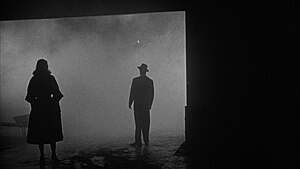 The opening sequence of Brick (2005, Johnson) has a very strong film noir 'feel' to it. Film noir is a Hollywood style used primarily in crime dramas, the noir period was for the early 1940's to the late 1950's. Film noir, black film, translated from French, was originally applied to film by Nino Frank in 1946. Film noir is normally used to emphasize cynical attitudes and sexual motivations and does this through effects like low-key and black and white. Modern film produced in this way are not called noir films, rather neo-noirs.
Brick (2005, Johnson) used these noir effects in the opening sequence to connote that the genre of the film would be Mystery/horror/thriller/neo-noir, examples of this used in Brick (2005, Johnson) are the lighting effects used when the main character is crouching next to the tunnel, the lighting used is low key when the camera is used as a close up of his face, reinforcing the film noir effect and creating enigma in the audience. Another effect that increases the tension of the opening sequence is the shot of the females hair and hand when she is next to the flowing water this also create enigma as the hair is in front of the females face so we don't know who she is also the colors around her are all grey except her wristbands which further reinforce the film noir effect.
LB :What are the conventions of an opening sequence?
In film, opening sequences are
commonly presented to introduce the audience into the film, and the main
story on which the film is based. Opening sequences can range from just a
title and opening credits which include snap shots of the setting, or it
can begin by placing the audience in the clip from the start by
various methods. One that seems to be popular is the use of varying
focus, as this method distorts the idea but allows the director to build
on the story.
Generally, character
exposition will be the main focus of the opening sequence displaying for
example a morning routine, or daily activity, thus putting the audience with
that character and showing them who they are and will include subtle
hints as to the personality of the character. Some films however, such as
BRICK (Johnson, 2005), create enigma. It begins by representing various
shots of an incident which the audience has no information of how, where,
when, why or who. In result, we find that this is the end section
of the film, which is common with either thrillers or dramas. One
last feature that keeps the audience attention, and is important is the
soundtrack,which more often than not, runs with the action, and
critically can set the mood for the film which can entice the audience to
watch the film until then end, or leave from boredom.

No comments:
Post a Comment